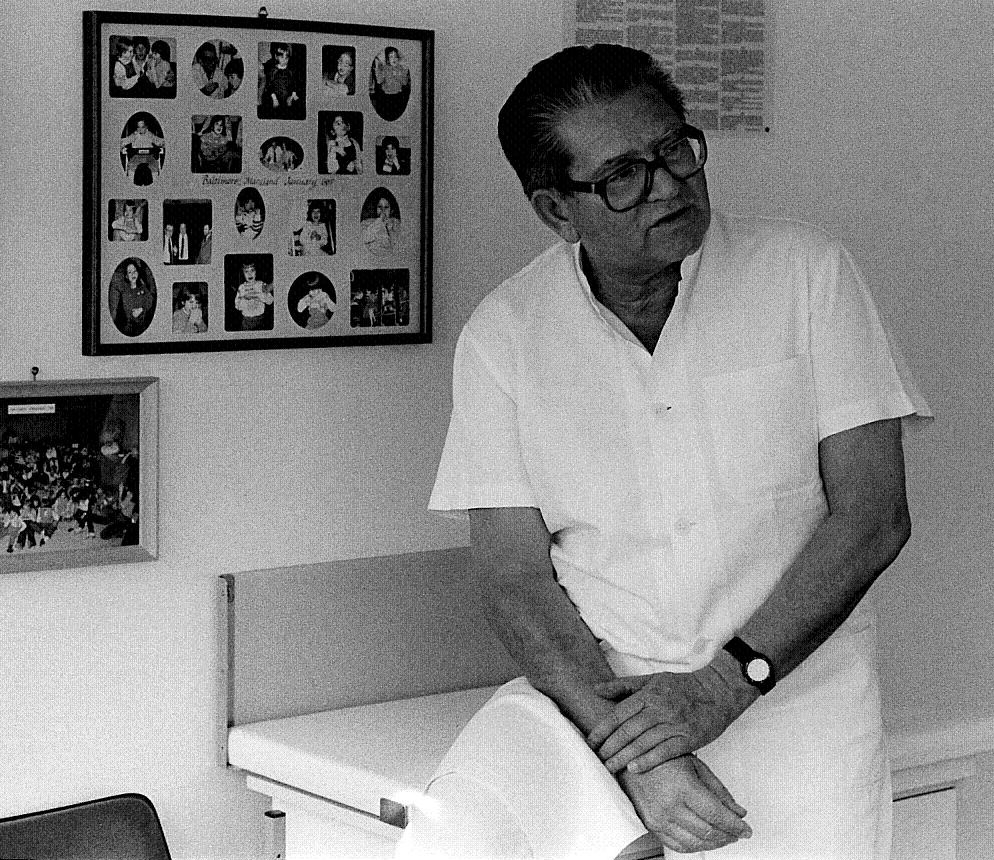
In 1954, Dr. Andreas Rett, a pediatrician in Vienna, Austria, noticed two girls sitting in his waiting room alongside their mothers. Both children were performing the same repetitive, hand-washing–like movements. Curious, he compared their clinical and developmental histories and discovered striking similarities.
After speaking with a nurse, Dr. Rett learned that six other girls in his department exhibited the same behaviors. Convinced that these children must share a single underlying disorder, he began documenting his observations. Not content with evaluating only his own patients, Dr. Rett filmed the girls and traveled across Europe in search of additional children with comparable symptoms.
Meanwhile, in 1960, young female patients in Sweden displaying similar characteristics came to the attention of their physician, Dr. Bengt Hagberg. He collected their medical records and set them aside, intending to revisit the cases when he had more time to investigate this intriguing pattern.
Dr. Andreas Rett
Dr. Andreas Rett
In 1966, Dr. Rett compiled his work and published his findings in several German medical journals. Although the syndrome would later gain far greater recognition worldwide, his early publications were not widely disseminated. In the pre-Internet era, long before the rapid pathways of electronic information exchange available today, medical discoveries could remain obscure for years.
A major turning point came in 1983, when the British journal Annals of Neurology published a paper on Rett syndrome. Authored by Hagberg and his colleagues, the article clearly defined the profile of Rett syndrome and brought significant international attention to the disorder. This publication became a milestone, introducing the condition to a broad audience, and the authors honored the pioneering work of Dr. Rett by naming the disorder after him.
As researchers continued to investigate the mysteries surrounding Rett syndrome, increasing scientific funding allowed the work to move forward. A team of scientists from Baylor College of Medicine and Stanford University advanced the clinical and laboratory studies needed to uncover the disorder’s genetic basis.
A major breakthrough occurred in 1999. At Baylor, researcher Ruthie Amir identified the gene responsible for Rett syndrome: MECP2. The Baylor team, led by Dr. Huda Y. Zoghbi, a Howard Hughes Medical Institute investigator and a professor of pediatrics, neurology, neurosurgery, and molecular and human genetics, located the gene on the X chromosome at Xq28. This discovery was a landmark achievement.
The finding that MECP2 is located on the X chromosome confirmed that Rett syndrome is an X-linked disorder. Because only one mutated copy of the gene on one of the two X chromosomes is sufficient to cause the condition, it is classified as a dominant disorder. This X-linked dominant inheritance pattern explains why Rett syndrome occurs almost exclusively in girls.
Dr. Huda Zoghbi
Source: International Rett Syndrome Association – www.rettsyndrome.org